Farming in a New Light: Highlights From Our Latest Webinar
How can agriculture and solar power generation co-exist and create added value? What happens when solar arrays and farms share space? That was the question at the center of CIN's latest Ideas for Innovation webinar, "Farming in a New Light." Four practitioners joined us to share what they've built, what they've learned, and what it means for rural electric cooperatives exploring agrivoltaics.
If you missed it, you can watch the full replay here. And if this is your first time hearing about agrivoltaics, keep reading. By the end of this post, you'll have a clear picture of what's possible and how co-ops can get involved.
What is agrivoltaics?
Agrivoltaics is the practice of combining solar energy generation with agricultural activity on the same piece of land. That might mean sheep grazing under solar panels, crops growing between rows, pollinator habitat replacing gravel, or cattle ranching designed around elevated panel systems.
The idea challenges a common assumption: that solar development and productive land use are competing priorities. As our panelists made clear, they don't have to be.
Four perspectives, one big idea

Nick de Vries, Silicon Ranch
Nick opened the webinar with a look at what large-scale agrivoltaics can accomplish when a company treats land as a long-term asset rather than a short-term lease. Silicon Ranch is a 15-year-old independent power producer based in Nashville that operates nearly 4 gigawatts of solar across the country, with a strong focus on cooperative and public power utilities. About seven years ago, they launched their Regenerative Energy Program, which pairs solar generation with sheep ranching, beekeeping, and more recently, cattle grazing.
Nick emphasized that this isn't just about optics. By owning their land outright, Silicon Ranch can invest in soil health over decades, measuring carbon content, improving organic matter, and building long-term value alongside electricity production. Their flock of over 5,000 sheep, including a breeding program in central Georgia focused on parasite resistance, is one example of how seriously they take the agricultural aspect of their business.
All three of their award-winning agrivoltaic projects serve cooperative utilities:
Houston Solar: North American Agrivoltaics
2024 Solar Ranch of the Year: Green Power EMC & Flint EMC
DeSoto Solar Farm: Lee County, Georgia 2025 Partner in Agriculture
Green Power EMC & Walton EMC
Christiana Solar – CattleTrackerTM
2026 Seal Award for Sustainable Innovation : Middle Tennessee Electric
Bancroft Station Solar Farm, GA
2020 Solar Power Magazine Most Forward Thinking Project : Walton EMC
Byron Kominek, Colorado Agrivoltaic Learning Center
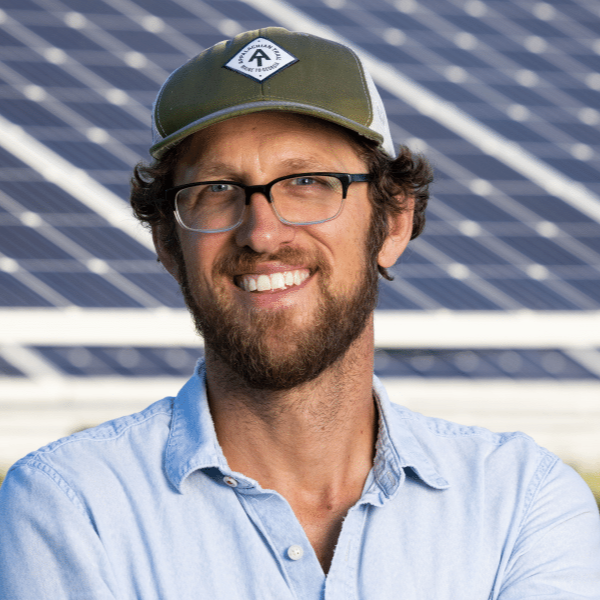
Byron brought the conversation down to a personal scale. He manages Jack's Solar Garden, a 1.2 megawatt community solar array on his family's 24-acre farm in Longmont, Colorado, and directs the Colorado Agrivoltaic Learning Center, a nonprofit dedicated to teaching others how to do what he's done.
His farm has been a living research site for over five years. He's grown dozens of vegetable varieties under the panels, worked with University of Arizona and Colorado State University researchers, and experimented with laying hens and cattle. One of his most compelling findings: raspberries growing under solar panels experienced temperatures up to 4 degrees Fahrenheit warmer during frost events, protecting flowers and extending the growing season in ways that simply aren't possible in open fields.
Byron also offered practical guidance for co-ops looking to bring agrivoltaics into their solar procurement. His advice: don't write "we want agrivoltaics" in your Request for Proposal (RFP). Instead, describe what you value, including land stewardship, vegetation retention during construction, and accessible site design for agricultural activity. Let developers respond with how they'll deliver it.
He also flagged an underutilized opportunity: voluntary member programs, similar to those at La Plata Electric Cooperative and Holy Cross Energy, that allow co-op members to contribute a small amount per month toward agricultural land support or renewable procurement. Small per-member contributions can add up to meaningful funding for agrivoltaic programming over time.

Mateusz Pena, Delta Montrose Electric Association
Mateusz offered an inside perspective from the co-op. Delta Montrose Electric Association (DMEA) is a member-owned cooperative in western Colorado that made headlines when it exited its power contract with Tri-State in 2020 and migrated to Guzman Energy. That move, driven by a board committed to affordability and local renewable development, is what made the Garnet Mesa Solar Project possible.
Garnet Mesa is an 80-megawatt solar installation in DMEA's service territory that became an agrivoltaic project not because it was planned that way, but because Delta County's planning commission required it. The original proposal was rejected. The developers went back, worked with local sheep farmers, irrigation districts, and the Natural Resources Conservation Service, and returned with a project design that preserved the land's agricultural character. It went operational in 2025 with 175,000 panels covering roughly 380 acres and a planned flock of 600 sheep.
One detail worth highlighting: the project converted from flood irrigation to micro-sprinkler systems, which allowed sheep to be introduced far earlier than expected. The economics worked too. As Mateusz put it, the project “penciled,” and that, ultimately, is what made it possible.
DMEA's story is a reminder that co-op board decisions, even ones that seem risky at the time, can open doors to outcomes that benefit members for decades.

Eric Barry, US Solar
Eric closed the webinar by connecting the practice of agrivoltaics to the cooperative model itself. US Solar is a Minneapolis-based independent power producer focused on 1 to 10 megawatt distributed solar and storage projects, a scale that Eric noted fits particularly well with distribution co-ops. They've pursued four types of agrivoltaics: pollinator habitat, sheep grazing, crop production, and cattle grazing.
Their Big Lake Solar Project in Minnesota is a standout example. Originally built in 2018, the site added crop production in 2022. Today, seven farmers coordinated by a nonprofit partner grow vegetables between the solar rows, with University of Minnesota researchers tracking soil health and yield data alongside them. The project has also created meaningful land access for Somali and Hmong community members in the area, populations for whom affordable farmland is often out of reach.
Eric made a point that speaks directly to co-op boards weighing these decisions: agrivoltaics is not a trade-off between land health and least-cost energy. Done well, you can have both. The mission and the math can align.
What this means for co-ops
Across all four presentations, a few themes emerged that are worth carrying into your next board conversation or RFP process.
Agrivoltaics is no longer experimental. With commercial-scale projects operating across the country, proven economics, and a growing body of agronomic research, co-ops have real evidence to work with. The question isn't whether it works, it's how to structure the opportunity in your service territory.
Permitting can be a driver, not just a barrier. DMEA's experience shows that community expectations around land use can actually lead to better project outcomes. A rejected permit that forced a redesign produced a more durable, community-aligned project than the original would have been.
Co-op values are a natural fit. Member ownership, community accountability, rural land stewardship: these aren't obstacles to agrivoltaics. They're arguments for it. As Eric put it, co-ops have a strong narrative to tell here, and their members are the audience.
Small co-ops can participate too. Whether it's through RFP language, voluntary member programs, site access agreements with local farmers, or simply attending webinars like this one, there are entry points at every scale.
Watch the full replay
Ready to go deeper? Watch the full "Farming in a New Light" webinar on our Ideas for Innovation page.
And if you want to be notified when future webinars go live, register for upcoming Ideas for Innovation sessions and subscribe to our newsletter.
Frequently asked questions
What is agrivoltaics?
Agrivoltaics is the dual use of land for both solar energy generation and agricultural activity. This includes practices like sheep grazing, crop production, pollinator habitat planting, and cattle ranching, all coexisting with an active solar array.
Do agrivoltaic projects cost more than standard solar?
Not necessarily. As multiple presenters noted, the economics can pencil when projects are well-designed and appropriately scaled. Sheep grazing, for example, can replace mowing costs. Pollinator habitat can replace gravel. The key is designing agrivoltaics in from the start rather than retrofitting it later.
Can a small co-op pursue agrivoltaics?
Yes. US Solar's 1 to 10 megawatt project range is specifically designed with distribution co-ops in mind. Even co-ops without the scale for a project like Garnet Mesa can explore RFP language, voluntary member programs, or site access agreements with local farmers.
How can a co-op include agrivoltaics in a solar RFP?
Byron Kominek's advice: describe what you value rather than naming a specific outcome. Ask for land stewardship plans, vegetation retention during construction, and site designs that allow agricultural access and movement. Let developers respond with how they'll meet those goals.
What agricultural uses work best with solar arrays?
It depends on the region, panel height, and site conditions. Sheep grazing is the most widely adopted. Pollinator habitat is the lowest barrier to entry. Crop production, particularly shade-tolerant leafy greens and berries, has shown strong results in research settings. Cattle grazing is an emerging frontier, with panel height and wire management being the primary design considerations.
Where can I learn more and connect with other co-op leaders exploring this topic?
Start with CIN's Ideas for Innovation webinar series, where practitioners share what's actually working inside co-ops across the country. You can also reach out to us directly at info@coopinnovation.org.
Co-op Innovation Network connects electric cooperative leaders to proven ideas, trusted peers, and practical resources. Learn more and register for upcoming webinars at coopinnovation.org.